

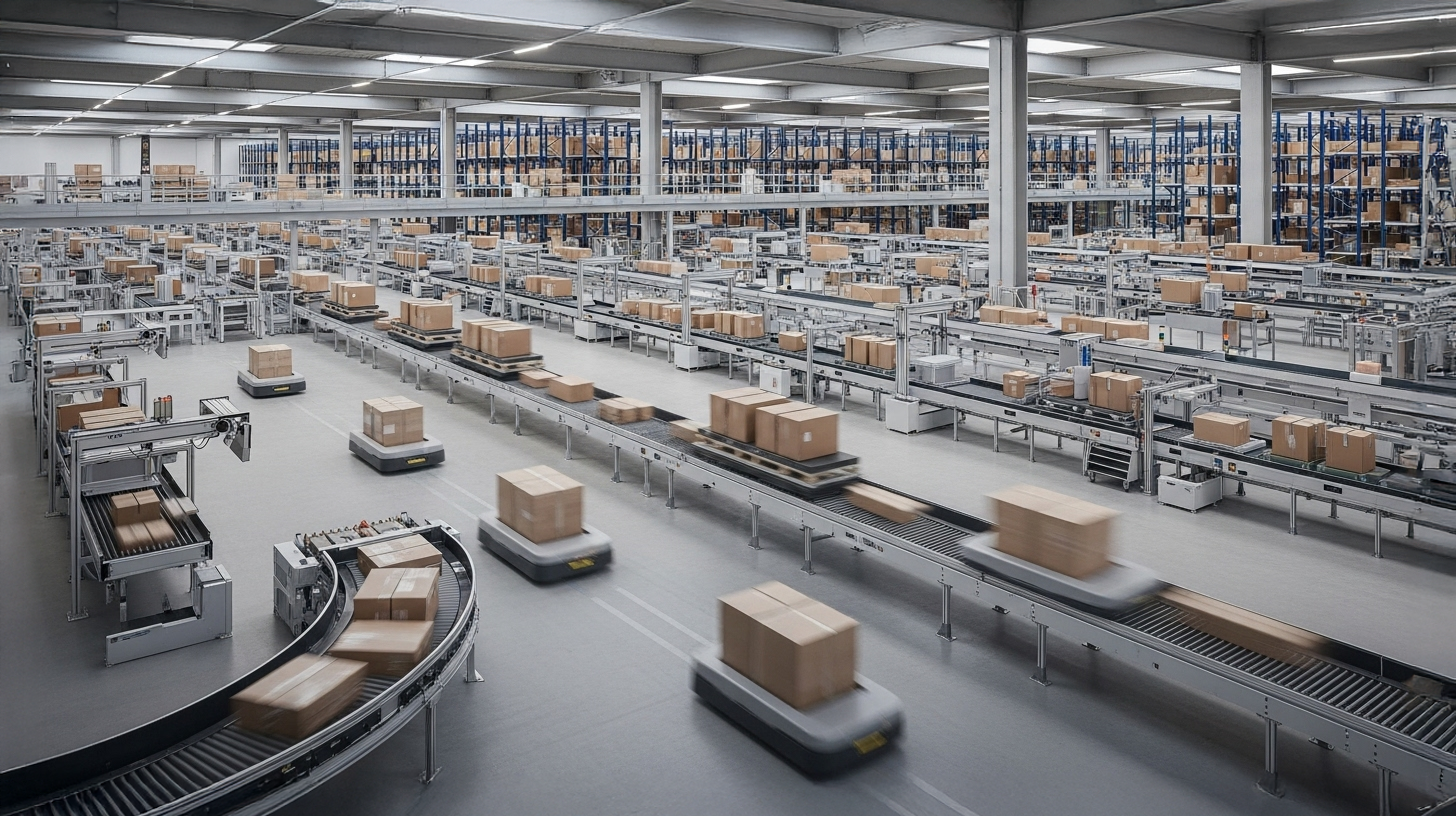
Roller Conveyor vs. Chain Conveyor in Intralogistics Applications
In automated warehouse and intralogistics systems, pallet conveyors play a critical role in connecting inbound, buffering, sorting, and outbound processes. Selecting the appropriate pallet conveyor type is essential for ensuring system reliability, efficiency, and long-term operational stability.
Among various solutions, roller pallet conveyors and chain pallet conveyors are the most commonly used. This article focuses on warehouse and logistics applications and provides a structured comparison from an engineering perspective.

Key Requirements of Pallet Conveying in Warehouse Systems
Typical warehouse pallet conveying systems share several characteristics:
-
Standardized pallet sizes (wooden or plastic pallets)
-
Stable conveying rhythm with local accumulation zones
-
Integration with stacker cranes, lifts, shuttles, or AGV systems
-
High demand for reliability and low maintenance
These requirements strongly influence the choice of conveyor structure.
Advantages of Roller Pallet Conveyors in Warehousing
Suitable for Standard Pallets and Accumulation Processes
Roller pallet conveyors are ideal for pallets with flat bottom surfaces. They are widely used in inbound buffer zones, sorting areas, and outbound accumulation lines, where controlled pallet flow and precise positioning are required.
Flexible Layout for Automated Warehouse Systems
Thanks to their modular design, roller conveyor systems can be easily configured into straight lines, curves, merges, and diverters. This flexibility makes them well-suited for complex warehouse material flow layouts.
Smooth and Quiet Operation
In e-commerce warehouses and distribution centers with frequent human interaction, roller pallet conveyors offer low noise levels and smooth movement, improving overall working conditions.
Typical Applications of Chain Pallet Conveyors in Logistics Centers
Heavy-Duty Pallet Handling
For warehouses handling heavy loads, uneven pallet weight distribution, or industrial goods, chain pallet conveyors provide superior load capacity and structural strength.
Long-Distance and Continuous Conveying
Chain conveyors are particularly effective in long, straight conveying sections such as dock-to-warehouse transfer lines, where continuous operation and durability are critical.
Robust Performance in Harsh Environments
In dusty, humid, or oil-contaminated warehouse environments, chain pallet conveyors demonstrate strong adaptability and stable performance.
Selection Guidelines for Warehouse Pallet Conveyor Systems
When to Choose a Roller Pallet Conveyor
-
Standardized pallets with flat bottom surfaces
-
Need for accumulation, buffering, or takt control
-
Noise-sensitive or personnel-intensive areas
-
Flexible integration with automated warehouse equipment
When to Choose a Chain Pallet Conveyor
-
Heavy or uneven pallet loads
-
Long-distance, continuous conveying
-
Harsh industrial environments
-
High priority on mechanical robustness and service life
Conclusion: System-Oriented Conveyor Selection for Warehousing
There is no single “best” pallet conveyor solution for all warehouse applications.
In modern intralogistics projects, a hybrid conveyor system combining roller and chain conveyors is often the most effective approach.
By evaluating pallet characteristics, process flow, environmental conditions, and future scalability, system integrators can design pallet conveying solutions that achieve optimal performance, reliability, and cost efficiency.
Share:
AGV Steering Wheel vs Differential Drive: Technical Comparison
Unlocking AGV Efficiency: How The Differential Wheel Module Transforms Movement And Precision