

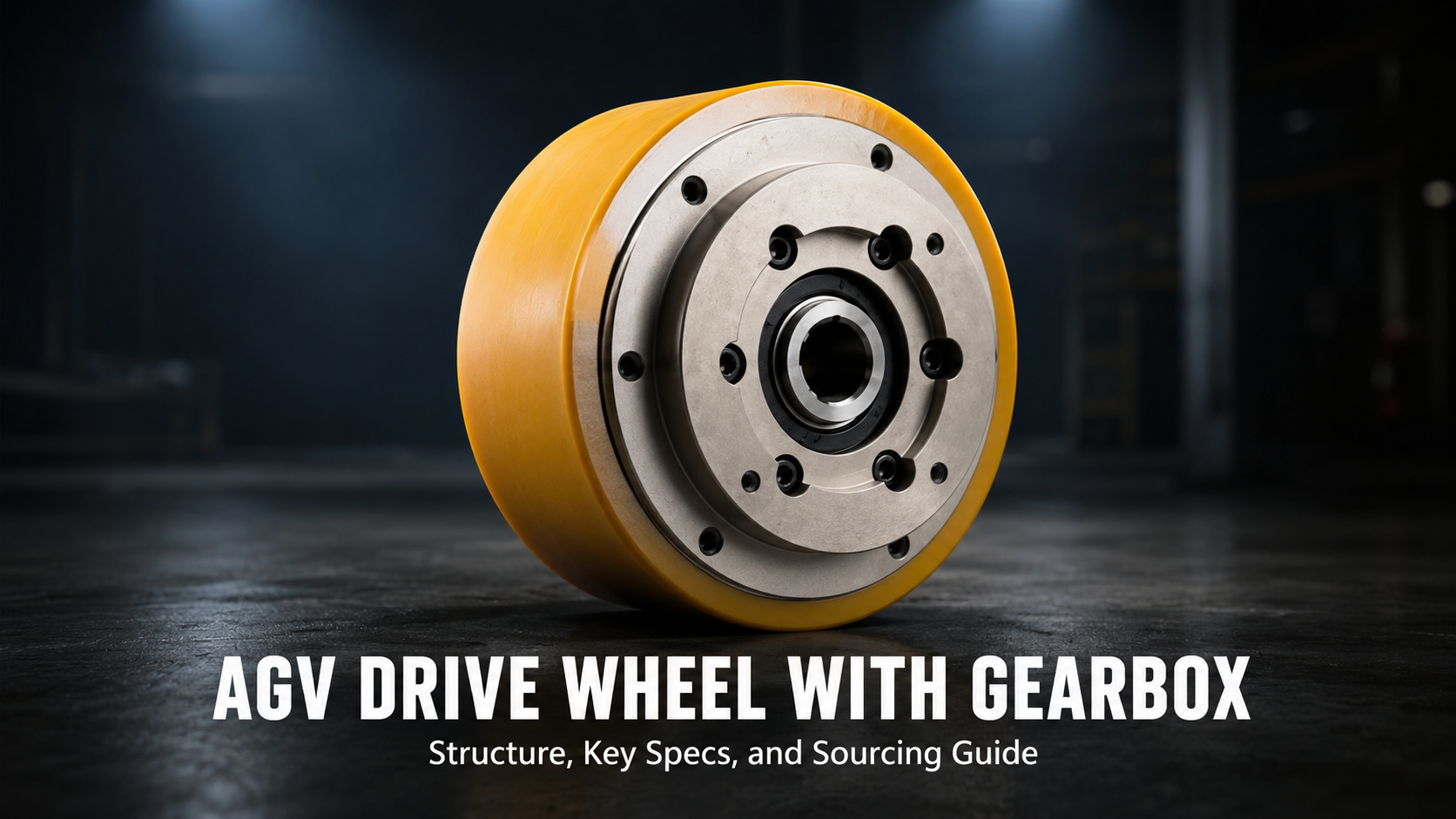
Entegre dişli kutusuna sahip tahrik tekerleği, depo AGV platformunda en kritik mekanik bileşenlerden biridir. Bağımsız bir motor veya ayrı bir dişli kutusu düzeneğinden farklı olarak, bu entegre ünite, planet redüksiyon aşamasını ve tahrik tekerleğini tek bir cıvatalı modülde birleştirir - şasi tasarımını basitleştirir, montaj adımlarını azaltır ve dişli kutusu çıkış mili ile tekerlek göbeği arasında tutarlı hizalama sağlar.
Bu kılavuz, dişli kutulu bir AGV tahrik tekerleğinin ne olduğunu, direksiyon tahrik tekerleği modüllerinden nasıl farklılaştığını, hangi özelliklerin en önemli olduğunu ve Çinli bir AGV bileşen üreticisinden tedarik ederken neleri doğrulamanız gerektiğini açıklar.

Dişli Kutulu AGV Tahrik Tekerleği Nedir?
Dişli kutulu bir AGV tahrik tekerleği, bir planet redüksiyon dişli kutusu ile kauçuk veya poliüretan bir tahrik tekerleğini tek bir düzeneğe birleştiren entegre bir aktarma organı bileşenidir. Dişli kutusu, tahrik motorunun (genellikle fırçasız bir servo motor) çıkış hızını düşürürken, AGV'yi tam yük altında hareket ettirmek için gereken torka kadar çıkış torkunu çarpar.
"Entegre" terimi, bu ürünü dişli kutusu ve tahrik tekerleğinin ayrı ayrı tedarik edildiği ve monte edildiği konfigürasyonlardan ayırır. Entegre bir ünitede, dişli kutusu çıkış flanşı, tekerlek göbeği ve yatak muhafazası, üretici tarafından eşleşen bir set olarak işlenir ve monte edilir - eş merkezliliği artırır, titreşimi azaltır ve AGV şasisindeki kurulum arayüzünü basitleştirir.
Bu tür tahrik tekerleği sabit eksenli bir bileşendir: tek yönde tahrik kuvveti sağlar ve bir direksiyon mekanizması içermez. En yaygın olarak diferansiyel tahrikli AGV platformlarında birincil tahrik tekerleği olarak kullanılır; burada her biri şasinin bir tarafında bulunan iki birim, hız diferansiyel kontrolü yoluyla hem itiş hem de direksiyon sağlar.
Dişli Kutulu Tahrik Tekerleği ve Direksiyon Tahrik Tekerleği Modülü
Bu iki ürün kategorisi tedarik sorgularında sıklıkla karıştırılmaktadır. Ayrım temeldir ve hem AGV'nin mekanik tasarımını hem de kontrol mimarisini etkiler.
| Özellik | Dişli Kutulu Tahrik Tekerleği | Direksiyon Tahrik Tekerleği Modülü |
|---|---|---|
| Direksiyon | Yok (sabit eksen) | Evet (motorlu döner 360°) |
| Tahrik yapılandırması | Diferansiyel tahrik (çiftler halinde kullanılır) | Tek veya çok tekerlekli direksiyonlu AGV |
| Birim başına motor sayısı | 1 (sadece tahrik) | 2 (tahrik + direksiyon) |
| Kontrol karmaşıklığı | Daha düşük | Daha yüksek |
| Mekanik karmaşıklık | Düşük | Orta–Yüksek |
| Tipik taşıma kapasitesi aralığı | 100 kg – 2.000 kg | 100 kg – 5.000 kg+ |
| AGV kapladığı alan etkisi | Minimum | Daha büyük (dönme boşluğu gerekir) |
Diferansiyel tahrik kullanan çoğu standart depo AGV ve AMR platformu için, dişli kutulu tahrik tekerleği doğru bileşendir. Direksiyon tahrik tekerleği modülleri, AGV'nin çok yönlü hareket yeteneğine ihtiyaç duyması veya platformun bağımsız direksiyon kontrolü ile tek bir merkezi olarak monte edilmiş tahrik tekerleği belirtmesi durumunda seçilir.

Entegre Ünitenin Temel Bileşenleri
Dişli kutulu bir AGV tahrik tekerleğinin ne içerdiğini anlamak, tedarik ekiplerinin doğru soruları sormasına ve tedarikçiler arasındaki kalite farklılıklarını belirlemesine yardımcı olur.
Planet Dişli Kutusu
Planet dişli kutusu, düzeneğin çekirdeğidir. Tahrik motoru milinden giriş kabul eder ve tekerlek göbeğine düşük hızlı, yüksek torklu çıkış sağlar. Tek kademeli planet dişli kutuları, 5:1 ila 20:1 arasında orta seviye redüksiyon oranları için yaygındır. İki kademeli konfigürasyonlar, düşük hareket hızlarında yüksek tork çıkışı gerektiren uygulamalar için 20:1 ila 100:1 arasında daha yüksek redüksiyon oranları elde eder. Planet dişlilerinin sayısı, dişli malzemesi (sinterlenmiş çelik ve sertleştirilmiş alaşım) ve boşluk özellikleri, yük kapasitesi, servis ömrü ve konumlandırma hassasiyetini etkiler.
Tahrik Tekerleği
Tahrik tekerleği doğrudan dişli kutusu çıkış miline veya çıkış flanşına monte edilir. Depo AGV uygulamaları için tekerlek çapı tipik olarak 100 mm ile 300 mm arasında değişir. Dişli malzemesi, zemin yüzeyi ve yük gereksinimlerine göre seçilir: poliüretan dişliler, düz beton depo zeminleri için standart seçimdir ve yuvarlanma direnci, çekiş ve zemin koruması arasında bir denge sunar. Katı kauçuk dişliler, yüzey farklılıkları olan ortamlarda veya daha yüksek şok emilimi gereken yerlerde kullanılır.
Çıkış Mili ve Yatak Montajı
Çıkış mili, torku dişli kutusundan tahrik tekerleğine aktarır ve aracın ağırlığı ile taşıma yükünün uyguladığı birleşik radyal ve eksenel yükleri kaldıracak şekilde boyutlandırılmalıdır. Yatak düzenlemesi - genellikle yüksek yükler için bir çift derin oluklu bilyalı rulman veya konik makaralı rulman - sürekli çalışma koşullarında beklenen servis ömrü için derecelendirilmelidir. Gres dolu boşluklara sahip sızdırmaz yataklar, depo ortamlarında bakım gerektirmeyen çalışma için standarttır.
Montaj Flanşı ve Muhafaza
Dişli kutusu muhafazası ve montaj flanşı, ünitenin AGV şasisi ile nasıl etkileştiğini tanımlar. Standart montaj konfigürasyonları arasında flanş montajı (doğrudan bir şasi plakasına cıvatalanmış) ve ayak montajı (bir taban plakası üzerinden cıvatalanmış) bulunur. Muhafaza malzemesi genellikle standart depo uygulamaları için dökme alüminyum veya ağır hizmet platformları için dökme demirdir. Tedarikçiye taahhütte bulunmadan önce montaj deliği düzeninin şasi tasarımınıza uyduğundan emin olun; özel flanşlar mevcuttur ancak teslim süresini ve takım maliyetini artırır.
Değerlendirilecek Temel Özellikler
Aşağıdaki parametreler, dişli kutulu bir AGV tahrik tekerleği ünitesinin performans zarfını ve entegrasyon gereksinimlerini tanımlar.
Nominal Yük Kapasitesi
Nominal yük kapasitesi, tahrik tekerleği ünitesinin, çıkış mili yataklarının tasarım sınırlarını aşmadan nominal hızda taşıyabileceği maksimum dikey kuvveti belirtir. Diferansiyel tahrikli bir AGV için, her bir tahrik tekerleğindeki yük, statik denge durumunda toplam araç ağırlığının (şasi artı taşıma yükü) yaklaşık yarısına eşittir - ancak hızlanma ve viraj alırken dinamik yük dağılımı bunu önemli ölçüde artırabilir. Ünitenin maksimum beklenen yüke karşı boyutlandırılırken her zaman en az 1,3'lük bir güvenlik faktörü uygulayın.
Dişli Kutusu Redüksiyon Oranı
Redüksiyon oranı, motor hızı ile tekerlek çıkış hızı arasındaki ilişkiyi belirler. Daha yüksek bir redüksiyon oranı, daha fazla çıkış torku ancak daha düşük maksimum tekerlek hızı sağlar. Hedef AGV seyahat hızınızdan, tahrik tekerleği çapınızdan ve motor nominal hızınızdan gerekli oranı hesaplayın. Seçilen oranın, normal seyahat sırasında motoru en yüksek verimlilik noktasında çalıştığından emin olun - sadece maksimum yük koşullarında değil.
Çıkış Torku
Nominal çıkış torku, dişli kutusu çıkış milinin dişli setinin termal ve mekanik sınırlarını aşmadan verebileceği maksimum sürekli torktur. AGV tahrik uygulamaları için gerekli çıkış torku, tam yükteki yuvarlanma direnci, maksimum çalışma eğimi ve istenen hızlanma oranı ile belirlenir. Hesaplanan değeri, tedarikçi veri sayfalarını karşılaştırırken minimum spesifikasyonunuz olarak 1,3–1,5 güvenlik faktörü ile kullanın.
Tekerlek Çapı
Tekerlek çapı, araç zemin açıklığını, motor hızı gereksinimini ve engel geçme yeteneğini etkiler. Daha büyük çaplı tekerlekler, daha iyi açıklık ve zemin düzensizlikleri üzerinde daha yumuşak hareket sağlar, ancak genel tahrik ünitesi yüksekliğini artırır ve daha yüksek bir dişli kutusu redüksiyon oranı gerektirebilir. Daha küçük çaplı tekerlekler, daha kompakt bir düzenek sağlar ancak zemin yüzey kalitesine ve derz boşluklarına karşı daha hassastır.
IP Derecesi
Giriş koruma derecesi, ünitenin toz ve neme karşı direncini tanımlar. IP54, çoğu iç mekan depo ortamı için standarttır. Gıda işleme tesisleri, dış mekan lojistik alanları veya su spreyi olan ortamlardaki uygulamalar için IP65 veya daha yüksek bir derece belirtilmelidir. IP derecesinin sadece dişli kutusu muhafazasına değil, motor-dişli kutusu arayüzü de dahil olmak üzere tüm düzeneğe uygulandığını doğrulayın.

Doğru Ünite Nasıl Seçilir?
Adım 1: Taşıma Kapasitesini ve Zemin Koşullarını Tanımlayın
Maksimum yük altında tam araç ağırlığı, zemin yüzey tipi (düz beton, boyalı zemin, genleşme derzleri) ve çalışma alanındaki maksimum eğim ile başlayın. Bu parametreler, tork hesaplamaları ve tekerlek dişli malzemesi seçimi için temel oluşturur.
Adım 2: Gerekli Çıkış Torkunu Hesaplayın
Gerekli tekerlek torku = (araç kütlesi + yük) × tekerlek yarıçapı × (yuvarlanma direnci katsayısı + sin(eğim açısı)). Düz beton için yuvarlanma direnci tipik olarak 0.01–0.02'dir. Hızlanma yüklerini ve bileşen varyasyonunu hesaba katmak için hesaplanan değere %20–30 ekleyin, ardından bu rakamı tedarikçi spesifikasyonlarını filtrelemek için kullanın.
Adım 3: Tekerlek Çapını ve Redüksiyon Oranını Hız Gereksinimleriyle Eşleştirin
Hedef AGV seyahat hızınızdan ve motor nominal hızınızdan, gerekli dişli kutusu redüksiyon oranını hesaplayın: oran = (motor RPM × tekerlek çevresi) ÷ (60 × hedef hız m/s cinsinden). Kısa listeye aldığınız tedarikçilerden temin edilebilen en yakın standart oranı seçin, ardından nominal motor RPM'deki elde edilen tekerlek hızının seyahat hızı gereksinimlerinizi karşıladığını doğrulayın.
Adım 4: Montaj Arayüzü Uyumluluğunu Doğrulayın
Tedarikçinin standart montaj flanşı deseninin şasi tasarımınızla uyumlu olduğunu onaylayın. Tahrik ünitesi yüksekliği ve genişliği de dahil olmak üzere genel zarf boyutlarını şasi boşluk kısıtlamalarınıza göre kontrol edin. Yeni platform tasarımları için, numune sipariş etmeden önce doğrudan uyumluluğu doğrulamak için tedarikçiye motor arayüzü boyutlarınızı sağlayın.
Çin Fabrikasından Tedarik Ederken Doğrulanması Gerekenler
Çin, AGV tahrik tekerleği ve dişli kutusu bileşenleri için küresel çapta baskın bir kaynaktır; çok sayıda uzmanlaşmış üretici, geniş bir özellik ve fiyat aralığında ürünler sunmaktadır. Aşağıdaki kontrol noktaları, endüstriyel kalite gereksinimlerini karşılayabilen tedarikçileri belirlemeye yardımcı olur.
Dişli seti ve çıkış mili için malzeme sertifikalarını isteyin. Endüstriyel AGV uygulamalarında yük taşıyan dişliler için standart özellik, 20CrMnTi veya eşdeğeri gibi sertleştirilmiş alaşımlı çeliktir. Birincil tahrik uygulamalarında sinterlenmiş toz metal dişlileri kullanan tedarikçiler, genellikle yük kapasitesi ve servis ömrü pahasına daha düşük bir fiyat noktasını hedeflerler.
Çalışma sıcaklığında nominal torku, verimliliği ve gürültü seviyesini gösteren bir test raporu talep edin. Saygın tedarikçiler, her parti için üretim test kayıtlarını tutar. Nominal hızda 70dB'nin üzerindeki bir gürültü seviyesi, bu sınıftaki bir ünitede düşük dişli kalitesi veya yetersiz montaj toleranslarının bir işaretidir.
Hacimli siparişlere geçmeden önce tedarikçinin AGV platformunuzda test yapmak için numune sağlayabildiğini doğrulayın. Yeni bir Çinli bileşen tedarikçisini AGV üretimi için devreye alırken minimum 5-10 ünite nitelikli çalıştırma standart bir uygulamadır.
Hem standart hem de özel spesifikasyonlar için teslim süresini onaylayın. Standart katalog üniteleri genellikle 2-4 hafta içinde temin edilebilir. Özel flanşlar, standart dışı redüksiyon oranları veya özel tekerlek dişli bileşikleri 4-6 hafta ek süre gerektirebilir. Bunu platform geliştirme ve üretim takviminize dahil edin.

SSS
500 kg yük kapasiteli bir AGV için hangi yük kapasitesini belirtmeliyim?
Yaklaşık 150 kg şasi ağırlığına sahip 500 kg yük kapasiteli bir AGV için toplam araç ağırlığı yaklaşık 650 kg'dır. Eşit yük dağılımına sahip iki tahrik tekerlekli diferansiyel konfigürasyon varsayıldığında, her bir tahrik tekerleği yaklaşık 325 kg statik yük taşır. 1,3–1,5 güvenlik faktörü uygulandığında, ünite başına minimum 420–490 kg nominal yük kapasitesi elde edilir. 600 kg nominal ünite, bu uygulama için standart seçimdir — bu nedenle 600 kg nominal tahrik tekerleği üniteleri depo AGV üretimindeki en yaygın özelliklerden biridir.
Bu dişli kutusu ünitesiyle herhangi bir fırçasız servo motor kullanabilir miyim?
Motor-dişli kutusu arayüzü, motor flanş boyutları, şaft çapı ve ana özellikler açısından eşleşmelidir. Çoğu AGV tahrik tekerleği dişli kutusu ünitesi, standart IEC veya NEMA motor flanş desenlerine göre tasarlanmıştır. Sipariş vermeden önce tedarikçinizle motor arayüzü özelliklerini onaylayın. Bazı tedarikçiler, motoru önceden takılı ve eşleşen bir düzenek olarak test edilmiş tahrik tekerleği üniteleri sunar — bu yaklaşım, arayüz uyumluluğu riskini ortadan kaldırır ve yeni platform tasarımları için önerilir.
Bir AGV tahrik tekerleği ve dişli kutusu ünitesinin tipik servis ömrü nedir?
Saygın üreticilerin iyi belirlenmiş üniteleri, nominal yük koşullarında 10.000-20.000 saat L10 yatak ömrü derecelendirmeleri elde eder. Dişli seti ömrü, malzeme kalitesine ve yağlamaya bağlıdır. Normal depo ortamlarında sızdırmaz, gres dolu üniteler, genellikle 5.000-8.000 çalışma saati boyunca yağlama servisi gerektirmez. Nominal yüklerinin üzerinde veya kirli ortamlarda çalışan ünitelerin servis ömürleri önemli ölçüde daha kısa olacaktır.
Bu uygulamada tek kademeli ve iki kademeli planet dişli kutusu arasındaki fark nedir?
Tek kademeli bir planet dişli kutusu, kompakt bir pakette yaklaşık 3:1 ila 10:1 oranında redüksiyon oranları elde eder. İki kademeli bir ünite, 10:1 ila 100:1 veya daha yüksek oranlar elde etmek için iki planet kademeyi birleştirir. Depo AGV uygulamaları için tipik 1.0-1.5 m/s seyahat hızları ve 2.000-4.000 rpm standart motor hızları ile 15:1 ila 40:1 redüksiyon oranları yaygındır - tekerlek çapına bağlı olarak genellikle tek kademeli bir ünitede elde edilebilir. İki kademeli üniteler tipik olarak ağır yük platformları veya eğimli AGV'ler gibi düşük hızlı, yüksek torklu uygulamalar için belirtilir.
Depo zeminleri için poliüretan mı yoksa kauçuk dişli mi daha iyidir?
Poliüretan dişliler, düz, kuru beton depo zeminleri için standart seçimdir. Kauçuktan daha düşük yuvarlanma direnci sunarlar - enerji verimliliğini ve pil çalışma süresini artırırlar - ve uzun süreli sabit duruşlar sırasında düzleşmeye karşı daha dirençlidirler. Kauçuk dişliler, zemin yüzeyinin biraz engebeli, boyalı veya ara sıra neme maruz kaldığı yerlerde tercih edilir, çünkü kauçuk daha yüksek çekiş ve yüzey farklılıklarına daha iyi uyum sağlar. Dişli malzemesini belirtmeden önce zemin yüzey tipini ve temizlik gereksinimlerini onaylayın.
Sonuç
Dişli kutulu AGV tahrik tekerleği, depo AGV platformu tasarımında temel bir bileşendir. Doğru spesifikasyonu sağlamak - yük kapasitesi, redüksiyon oranı, çıkış torku, tekerlek çapı ve montaj arayüzü - platformun görev döngüsü boyunca güvenilir performans ve uzun servis ömrü için çok önemlidir.
HKT Robot, depo lojistiği AGV ve AMR uygulamaları için optimize edilmiş, 200 kg'dan 2.000 kg'a kadar yük derecelerine sahip entegre AGV tahrik tekerleği ve dişli kutusu üniteleri üretmektedir. Hacimli üretim için OEM desteği ile standart ve özel spesifikasyonlar mevcuttur. Proje gereksinimlerinizi görüşmek ve platform kalifikasyonu için numune talep etmek üzere mühendislik ekibimizle iletişime geçin.
Paylaşmak:
Lojistik Depo Otomasyonu için AGV Kaldırma Mekanizması
AGV Tahrik Motoru Enkoder Seçimi: Artımlı Enkoderler mi Mutlak Enkoderler mi