

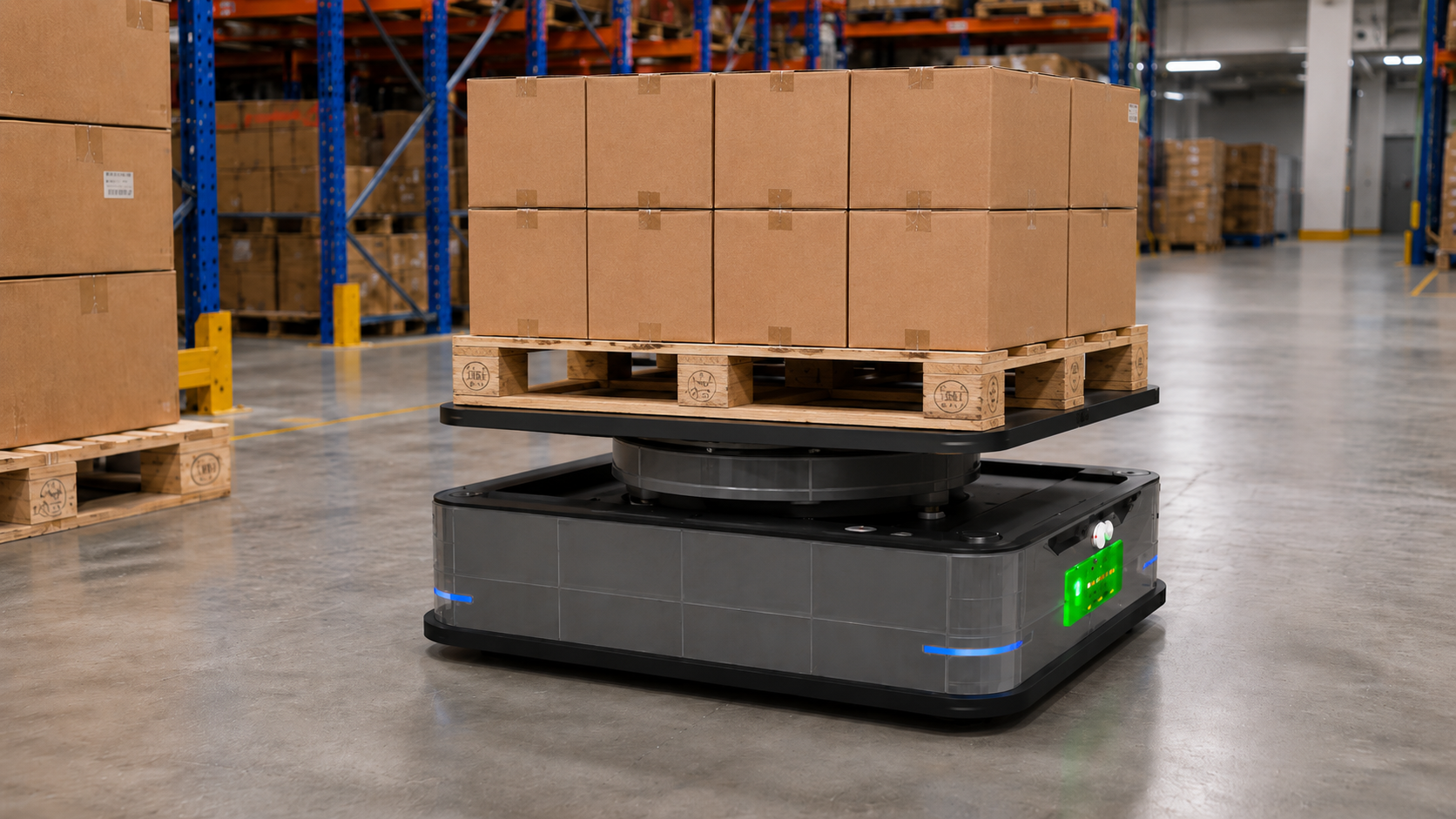
Para un AGV o AMR utilizado en logística y automatización de almacenes, el movimiento es solo una parte de la tarea. El robot también debe completar la transferencia de material de manera fiable. Si el mecanismo de elevación AGV no se selecciona correctamente, el robot puede experimentar una elevación inestable, un posicionamiento impreciso, una carga desigual o un desgaste excesivo con el tiempo, lo que puede ralentizar el flujo de trabajo y aumentar los costos de mantenimiento.
Por lo tanto, la selección de un mecanismo de elevación AGV debe ir más allá de la capacidad de elevación. También debe considerar el tipo de carga, la carrera de elevación, el tamaño del robot, el método de acoplamiento, la frecuencia de trabajo, la precisión de posicionamiento y el diseño del almacén.
 Principales tipos de sistemas de elevación AGV en almacenes logísticos
No existe un mecanismo de elevación único adecuado para cada AGV o AMR. Para los robots AGV/AMR utilizados en almacenes logísticos, el diseño adecuado depende del peso de la carga, la carrera de elevación, la altura del robot, la frecuencia de trabajo y los requisitos de acoplamiento.
Mecanismo de elevación de husillo eléctrico
Un mecanismo de elevación de husillo eléctrico se utiliza comúnmente en plataformas AGV y AMR compactas. Utiliza una estructura de husillo accionada por motor para subir y bajar la plataforma de elevación.
Esta estructura es adecuada para aplicaciones que requieren un movimiento de elevación controlado, una capacidad de carga moderada y un espacio de instalación compacto. Se utiliza a menudo en robots elevadores de estanterías, robots de manipulación de materiales pequeños y AMR de almacén.

Mecanismo de elevación de tijera
Un mecanismo de elevación de tijera es adecuado cuando el robot necesita una carrera de elevación mayor. Puede proporcionar una altura de elevación relativamente alta, pero generalmente requiere más espacio vertical dentro del cuerpo del robot.
Este tipo de mecanismo de elevación se utiliza a menudo en aplicaciones donde la carga necesita ser elevada para coincidir con una estación de trabajo, una cinta transportadora o una altura de transferencia.

Mecanismo de elevación de leva
Un mecanismo de elevación de leva se utiliza a menudo para aplicaciones de elevación de carrera corta. Puede proporcionar un movimiento de elevación y descenso rápido con una estructura relativamente simple.
Este diseño es adecuado para robots que necesitan acciones de elevación repetidas pero no requieren una altura de elevación muy grande.
Mecanismo de elevación hidráulico
Los mecanismos de elevación hidráulicos se utilizan generalmente para cargas más pesadas. Pueden proporcionar una fuerte fuerza de elevación, pero el sistema es más complejo que una estructura de elevación eléctrica.
Para AGV de servicio pesado, robots de manipulación de palets o plataformas de transporte de material industrial, la elevación hidráulica puede considerarse cuando la elevación eléctrica no puede satisfacer los requisitos de carga.
Módulo de elevación de rodillos
Para aplicaciones de acoplamiento de cintas transportadoras, el mecanismo de elevación puede combinarse con un módulo de rodillos. El robot puede elevar la carga a la altura requerida y luego transferirla horizontalmente a través de rodillos.
Este tipo de solución se utiliza comúnmente en almacenes automatizados, líneas de producción y sistemas de transferencia de materiales.
Aplicaciones comunes de los mecanismos de elevación AGV en almacenes logísticos
Los mecanismos de elevación AGV se utilizan ampliamente en logística, almacenamiento, fabricación y sistemas de manipulación de materiales. Diferentes diseños de almacén y tipos de carga requieren diferentes estructuras de elevación.
Robots elevadores de estanterías
En las aplicaciones de elevación de estanterías, el AGV o AMR se mueve debajo de un estante o estantería, lo eleva desde la parte inferior, lo transporta a la ubicación objetivo y luego lo baja con precisión. Este tipo de aplicación requiere una estructura de elevación compacta, soporte estable y buena precisión de posicionamiento.
Si la plataforma de elevación no es lo suficientemente estable, la estantería puede tambalearse durante la aceleración, el frenado o los giros. Esto puede afectar la seguridad y reducir la velocidad de trabajo del robot.
AMR de transferencia de cubetas y cajas
Para robots de almacén más pequeños, el mecanismo de elevación puede utilizarse para levantar cubetas de plástico, cajas, bandejas o cajas de material. Estas aplicaciones suelen requerir una capacidad de elevación moderada, una estructura compacta y un funcionamiento repetitivo fiable.
En este tipo de robot, la altura de elevación y el equilibrio de la carga son especialmente importantes. Si la carga no está centrada, el mecanismo de elevación puede desgastarse más rápidamente o causar una fuerza desigual en el chasis del robot.
AGV de acoplamiento a cintas transportadoras
Algunos AGV necesitan acoplarse con líneas de transportadores, transportadores de rodillos, estaciones de trabajo o líneas de embalaje. En estas aplicaciones, la altura de elevación debe coincidir con la altura del transportador con precisión.
Una pequeña diferencia de altura puede causar fallos de transferencia, impacto del producto o atascos de material. Por lo tanto, el mecanismo de elevación debe diseñarse junto con la estructura de acoplamiento, el sistema de sensores y la precisión de posicionamiento del robot.
Manipulación de materiales en la línea de producción
En las fábricas, los robots AGV/AMR se utilizan a menudo para mover materiales entre áreas de almacenamiento, líneas de montaje, máquinas CNC, estaciones de prueba y áreas de embalaje. El mecanismo de elevación permite al robot recoger o liberar materiales automáticamente sin manipulación manual.
Para esta aplicación, la frecuencia de trabajo es importante. Un robot que funciona continuamente durante turnos largos necesita una estructura de elevación con buena durabilidad y rendimiento mecánico estable.
Cómo elegir un mecanismo de elevación AGV adecuado
Al elegir un mecanismo de elevación AGV para aplicaciones de almacén logístico, el primer paso es comprender la tarea de trabajo real del robot. Un proceso de selección práctico debe incluir los siguientes puntos:
-
Confirmar el peso de la carga y la carga útil máxima.
-
Confirmar el tamaño y la forma de la carga.
-
Comprobar si la carga está centrada o desplazada.
-
Definir la altura y la carrera de elevación requeridas.
-
Confirmar la altura del chasis del robot y el espacio de instalación disponible.
-
Comprender el método de acoplamiento, como estantería, cinta transportadora, paleta o estación de trabajo.
-
Confirmar la frecuencia de trabajo y el tiempo de funcionamiento diario.
-
Elegir el motor, la transmisión, la estructura de guía y el sistema de sensores adecuados.
El mecanismo de elevación debe diseñarse como parte de todo el sistema AGV/AMR, no como una parte mecánica aislada. Debe funcionar en conjunto con el sistema de ruedas motrices, la estructura del chasis, la batería, el controlador, los sensores y el flujo de trabajo del almacén.
Asóciese con HKT ROBOT para mecanismos de elevación AGV
Desde 2013, HKT ROBOT se ha dedicado a la investigación, desarrollo y fabricación de motores AGV, ruedas de dirección AGV y mecanismos de elevación AGV. Con una amplia experiencia en logística de almacenes, equipos escénicos y aplicaciones de maquinaria agrícola, ofrecemos soluciones diseñadas para un rendimiento en el mundo real. Nuestros productos están certificados bajo el sistema de gestión de calidad ISO 9001, proporcionando una garantía fiable para la estabilidad del producto y la calidad de fabricación.
Nuestro mecanismo de elevación AGV presenta un diseño compacto integrado con tres husillos centrales y una plataforma giratoria incorporada. Esta estructura ahorra espacio de instalación al tiempo que permite una elevación vertical precisa. Con interruptores de límite superior e inferior, el sistema garantiza un posicionamiento preciso y un funcionamiento más suave. Soporta capacidades de carga de 300 kg a 3000 kg y ofrece una vida útil de más de 300.000 ciclos, lo que lo hace lo suficientemente duradero para un uso de alta frecuencia, al tiempo que ayuda a reducir las tasas de fallos, los costos de mantenimiento y los riesgos de tiempo de inactividad.
Para brindar a los clientes una mayor tranquilidad, también ofrecemos una garantía de 2 años. Si necesita un mecanismo de elevación para AGV o automatización de almacenes, comuníquese con HKT ROBOT. Nuestro equipo está en línea las 24 horas del día, los 7 días de la semana y listo para apoyar su proyecto con un servicio rápido y profesional.
Compartir:
Unidad de accionamiento diferencial AGV: cómo funciona, componentes clave y guía de selección
Rueda motriz AGV con caja de cambios: estructura, especificaciones clave y guía de compra