

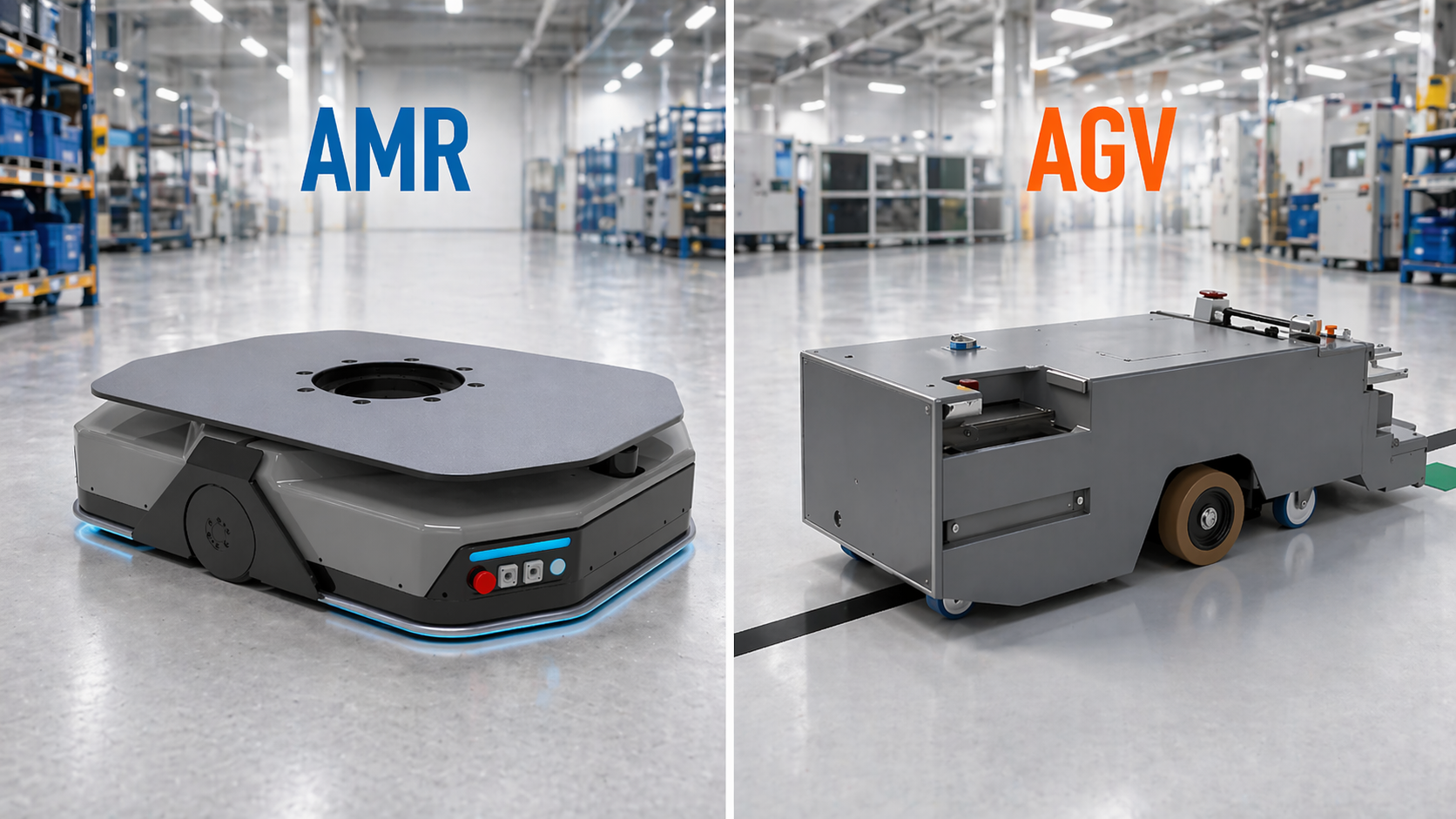
Las aplicaciones de AGV y AMR se están expandiendo rápidamente en almacenes, fábricas, talleres y sistemas de logística inteligente. Ambos mueven materiales de manera eficiente y reducen la mano de obra manual como nunca antes. Pero no son lo mismo. Este artículo desglosa la diferencia entre AGV y AMR, cómo elegir entre ellos y dónde funciona mejor cada uno.

¿Qué es un AGV?
Un AGV, o Vehículo de Guiado Automático, es un vehículo móvil que se basa en tecnología de navegación para viajar a lo largo de una ruta preestablecida. En la mayoría de los casos, se mueve basándose en cinta magnética, códigos QR, reflectores, guiado láser u otros métodos de guiado fijos. La ruta se planifica primero y luego el vehículo sigue ese camino una y otra vez.
Los AGV se utilizan a menudo en lugares donde la ruta es estable. Si el flujo de producción es claro, los puntos de recogida son fijos y el entorno de trabajo no cambia mucho, un AGV puede ser una opción muy práctica.
En una fábrica, por ejemplo, un AGV puede mover material entre almacenamiento, montaje, pruebas y embalaje. En un almacén, puede transportar carros, estantes o paletas a lo largo de una ruta regular. En este tipo de entorno, el valor de un AGV no es la "libertad". Su valor es la estabilidad, la repetibilidad y un control más fácil. En HKT Robot, ofrecemos ruedas motrices para AGV, motores para AGV, elevadores para AGV y todo lo que necesita para satisfacer sus demandas.
¿Qué es un AMR?
Un AMR, o Robot Móvil Autónomo, que se origina en el campo de los avances en robótica e IA, funciona de una manera más flexible. En lugar de depender principalmente de una ruta fija, puede percibir activamente su entorno a través de tecnologías como LiDAR y sensores de visión para construir o usar un mapa del entorno, detectar obstáculos y ajustar su ruta en tiempo real.
Ese es el punto clave en la comparación AMR vs AGV. Un AMR es mejor para lidiar con entornos cambiantes. Si la ruta está bloqueada, si hay personas moviéndose o si el área de trabajo cambia a menudo, un AMR tiene una clara ventaja.
Así, los AMR se están volviendo más comunes en la automatización moderna de almacenes, fábricas inteligentes y entornos de tráfico mixto. Se adaptan a sitios donde la flexibilidad importa más que la simplicidad de la ruta. Aun así, es importante tener una cosa clara: el AMR no es solo un tema de software.
AGV vs AMR: las diferencias fundamentales
Si explico AGV vs AMR de la manera más sencilla, se ve así:
| Artículo | AGV | AMR |
| Método de navegación | Ruta fija o guiada | Planificación de ruta autónoma |
| Flexibilidad | Menor | Mayor |
| Adaptabilidad al cambio de sitio | Limitada | Mejor |
| Ideal para | Transporte estable y repetitivo | Entornos dinámicos y cambiantes |
| Enfoque de implementación | Configuración de ruta | Mapeo, detección, integración de software |
| Manejo de obstáculos | Más limitado | Más flexible |
Entonces, si su proceso es estable y repetible, el AGV puede ser la mejor opción. Si su proceso cambia a menudo y el entorno es menos predecible, el AMR puede tener más sentido.

Pero esta comparación no debe detenerse en la navegación. El rendimiento real depende de la plataforma de movimiento subyacente. Un vehículo que se mueve todo el día necesita tracción adecuada, respuesta de la dirección, par motor y capacidad de carga: las ruedas motrices, los servomotores, los reductores planetarios para AGV y los módulos de dirección son cruciales para el funcionamiento diario, independientemente del tipo de robot. En HKT Robot, esta es la parte en la que nos centramos cada día. Nuestro trabajo no se limita a suministrar piezas. También ayudamos a igualar la estructura adecuada para la propia aplicación.
Aplicaciones de AGV
Los AGV siguen siendo ampliamente utilizados, y por una buena razón. En muchos entornos industriales, una ruta fija no es una limitación. De hecho, es una ventaja.
1. Líneas de fabricación
En los talleres de producción, los materiales a menudo se mueven entre puntos fijos. Las materias primas van a un área, las piezas semiterminadas a otra y los productos terminados se dirigen a inspección o embalaje. Este tipo de ruta es altamente repetible, por lo que los AGV se adaptan naturalmente.
2. Transferencia de almacén
En los almacenes, los AGV pueden mover palets, estanterías o carros entre zonas de almacenamiento y expedición. Si el diseño es estructurado y la ruta es conocida, los sistemas AGV pueden ser estables y fáciles de gestionar.
3. Manipulación de materiales pesados
Para tareas de transporte más pesadas, los AGV a menudo se utilizan con estructuras de chasis más robustas y sistemas de propulsión de alta resistencia. En este caso, el tipo de navegación es solo la mitad del trabajo. El módulo de rueda, el motor, el reductor y el diseño de soporte de carga se vuelven aún más importantes.
Aquí es también donde la selección de componentes empieza a importar más. Una plataforma de alta resistencia necesita algo más que suficiente potencia sobre el papel. Necesita un contacto estable con el suelo, un rendimiento de dirección fiable y suficiente margen estructural para un uso a largo plazo.
Aplicaciones AMR
Los AMR son una mejor opción cuando el sitio es más dinámico.
1. Almacenamiento inteligente
En la automatización de almacenes moderna, los patrones de pedidos pueden cambiar rápidamente. Las rutas pueden no permanecer fijas. Operadores, carretillas elevadoras y equipos móviles pueden compartir el mismo espacio. En este entorno, un AMR puede mejorar la flexibilidad y reducir la necesidad de reelaborar la ruta.
2. Entornos de producción mixtos
Algunas fábricas no operan una línea de productos estable durante todo el año. Cambian modelos, ajustan estaciones de trabajo o modifican el flujo logístico interno. Los AMR se adaptan mejor aquí porque pueden adaptarse con mayor facilidad.
3. Transporte médico, de laboratorio y de servicios
Los hospitales, laboratorios y entornos interiores similares a menudo se benefician de los AMR porque el camino no siempre se puede predecir perfectamente. La capacidad de detectar obstáculos y cambiar de ruta importa más en estas situaciones.
Aun así, incluso aquí, la base de hardware no es algo que deba pasarse por alto. El movimiento suave, el funcionamiento silencioso, el control preciso y el giro fiable son todos importantes. Un robot solo puede comportarse de forma inteligente si el sistema de movimiento físico responde con precisión.
Cómo seleccionar entre AGV y AMR
Un error que a menudo vemos en la selección de AGV vs AMR es centrarse demasiado en el método de guiado y no lo suficiente en la base mecánica.
Antes de elegir el tipo de vehículo, también ayuda revisar:
-
carga útil
-
velocidad
-
aceleración
-
estado del suelo
-
radio de giro
-
disposición de las ruedas
-
requisito de ángulo de dirección
-
potencia del motor
-
tipo de codificador
-
espacio de instalación
-
método de control
Por ejemplo, si la carga es pesada y el espacio es reducido, una solución estándar puede no ser suficiente. Si el robot necesita girar en un área estrecha, el diseño del módulo de rueda se vuelve crítico. Si el suelo tiene juntas, pendiente o secciones irregulares, el contacto rueda-suelo y el manejo de impactos afectarán la estabilidad.
Por eso, el sistema de movimiento debe discutirse pronto, no después de que el concepto de navegación ya esté fijo.
Para nosotros, comenzamos con su carga útil específica, las condiciones del sitio y los requisitos de rendimiento para recomendar el sistema de transmisión óptimo, ya sean ruedas diferenciales para AGV de servicio pesado, ruedas motrices direccionales AMR de precisión con ejes de freno extendidos o combinaciones personalizadas de servomotor y caja de cambios planetaria. Nos preocupamos no solo por vender componentes, sino por asegurar que funcionen de manera confiable en su aplicación real.
HKT Robot en soluciones de movimiento AGV y AMR reales
Para los sistemas AGV y AMR, el desafío oculto no suele ser el concepto. Es convertir el concepto en una plataforma que funcione de forma fiable todos los días.
Ahí es donde HKT Robot encaja naturalmente en la discusión.

Llevamos en este campo desde 2013, centrándonos en componentes para robots móviles industriales y soluciones de movimiento relacionadas. Nuestro enfoque sigue siendo práctico: hacer bien los detalles, responder rápidamente y apoyar el proyecto con una comunicación de ingeniería real. Con una garantía de 2 años, soporte técnico las 24 horas, capacidad de personalización flexible y precios rentables sin comprometer la calidad, nuestro objetivo es hacer que la selección de componentes y la adecuación del proyecto sean más viables, no más complicadas.
[Contacte con HKT Robot ahora] – Analicemos su carga útil, las condiciones del sitio y los requisitos de rendimiento para construir la base de movimiento perfecta para su proyecto de automatización.
Compartir:
Optimización del accionamiento de cremallera y piñón con caja de engranajes planetarios
¿Cómo elegir las ruedas AGV adecuadas? Un análisis en profundidad de las ruedas motrices AGV, las ruedas motrices direccionales AGV y las ruedas giratorias